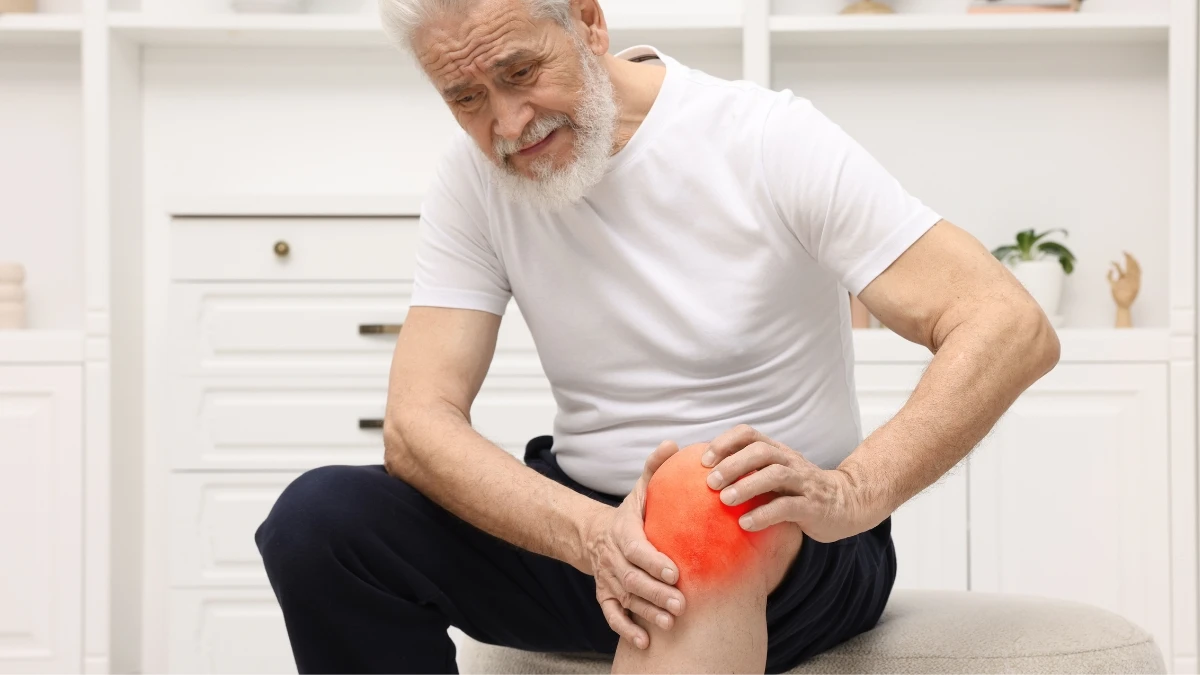
You wake up, step out of bed, and that familiar ache in your calves returns. You might tell yourself it’s just “wear and tear” or a sign that you’re getting older. But here is the truth: chronic leg pain is not a requirement of aging.
Many people over 60 dismiss their discomfort, thinking it’s inevitable. This is a mistake. When you ignore persistent leg pain, you might be missing early warning signs of vascular issues, nerve compression, or simple nutritional gaps that are easy to fix. In 2026, we have better tools than ever to identify these issues early.
This guide covers five specific factors that doctors often miss, and what you can do about them today.
1. Peripheral Artery Disease (PAD): The “Silent” Circulation Clog
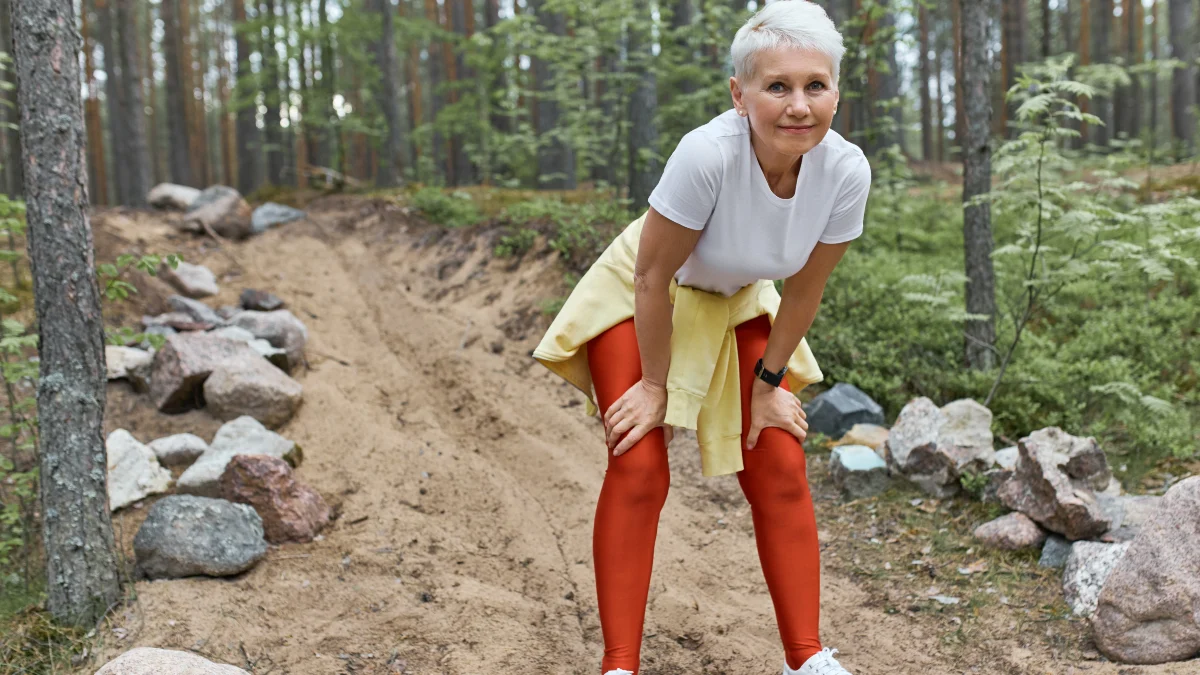
Symptom Spotlight: Does your leg pain start when you walk but vanish the moment you sit down?
This specific type of pain is called claudication. It happens because your leg muscles aren’t getting enough oxygen-rich blood. As we age, our arteries can stiffen and narrow due to plaque buildup. Think of it like a clogged pipe in your home; the water still flows, but not fast enough to handle a heavy load.
Recent 2026 data from the CDC shows that 1 in 20 Americans over age 50 now lives with PAD. It’s often “silent” because people simply walk less to avoid the pain, never realizing their circulation is the culprit.
What to look for:
- Cramping in the hips, thighs, or calves during exercise.
- Legs that feel cold to the touch.
- Sores on your toes or feet that won’t heal.
Quick Action Tip: Check your “walking asymmetry” on your smartwatch. Many modern wearables now alert you if your stride changes, which can be an early sign of one-sided blood flow issues.
2. Spinal Stenosis: When the Back Controls the Legs
The “Shopping Cart” Sign
- Sciatica: Radiating leg pain.
- Foot Weakness: Tripping over thin carpets.
- Numbness: Leg “falling asleep” sensation.

Symptom Spotlight: Do you find yourself leaning on a shopping cart to get relief while at the grocery store?
While the pain is in your legs, the problem might actually be in your spine. Spinal stenosis is a narrowing of the spaces within your spine. This puts pressure on the nerves that travel down to your legs.
This often feels like a dull ache, heaviness, or even a “pins and needles” sensation. Because the pain happens when you stand up straight, leaning forward (like on a shopping cart) opens up that spinal space and provides instant relief.
Common signs of nerve compression:
- Pain that radiates from the lower back down the back of the leg (sciatica).
- Weakness in the foot that causes you to “trip” over thin carpets.
- Numbness that feels like your leg is “falling asleep.”
Quick Action Tip: Try the “Leaning Test.” If your leg pain gets significantly better when you bend forward at the waist, your back, not your legs, is likely the source.
3. Sarcopenia and “Inflammaging.”
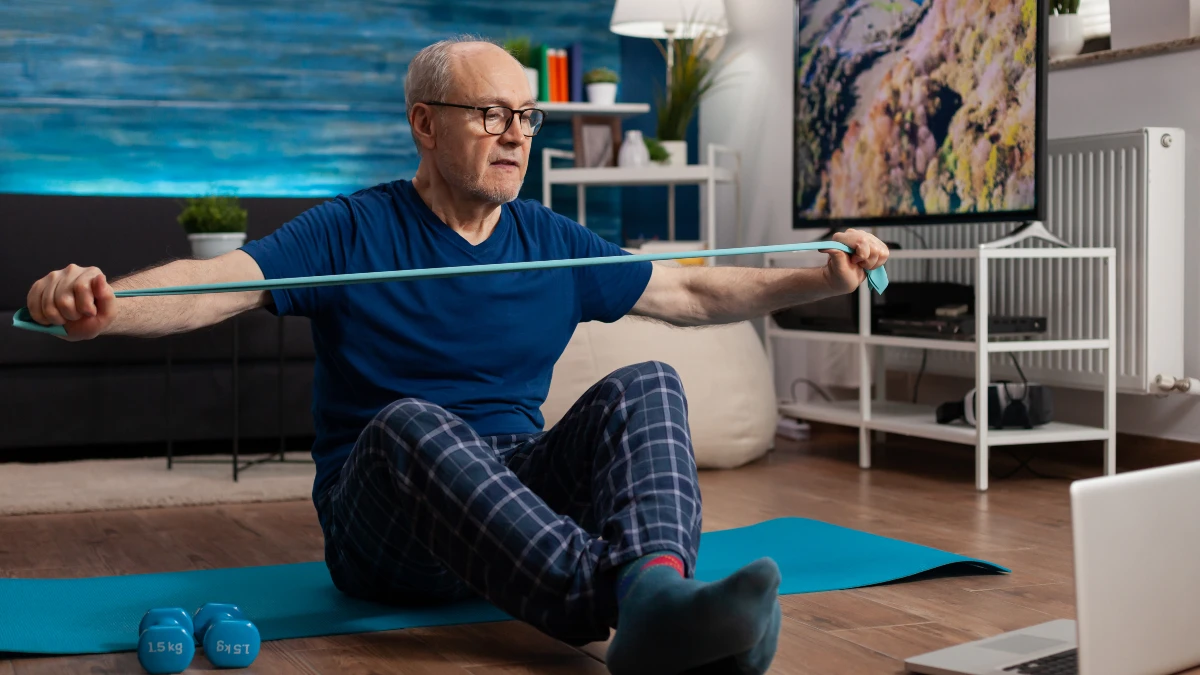
Symptom Spotlight: Do your legs feel “heavy,” like you’re walking through mud?
By age 60, most people have lost a significant amount of muscle mass. This is called sarcopenia. When you lose muscle, the remaining fibers have to work twice as hard, leading to constant fatigue and soreness.
Shutterstock
Why this matters:
- Muscle loss makes you more likely to fall.
- Inflammation can make “normal” activity feel painful.
- Weak muscles put extra stress on your knee and hip joints.
Quick Action Tip: Increase your protein intake. Aim for 25–30 grams of protein at every meal to help your body repair the muscle you have.
4. The “Micro-Nutrient Gap” (B1 and Magnesium)

Symptom Spotlight: Do you suffer from intense leg cramps that wake you up in the middle of the night?
Many people over 60 take medications for blood pressure or heart health. Some of these, like diuretics (water pills), can flush essential minerals out of your body.
Two big ones are Magnesium and Vitamin B1 (Thiamine). Magnesium helps your muscles relax after they contract. Without it, the muscle stays “locked,” causing a painful Charlie horse. B1 is essential for nerve health; a deficiency can feel like burning or tingling in the feet.
The “Gap” symptoms:
- Sudden, sharp “knotting” in the calf at 3:00 AM.
- Restless legs that won’t stay still at night.
- A “burning” sensation in the soles of your feet.
Quick Action Tip: Ask your doctor for a “micronutrient panel” blood test. Don’t just start taking supplements, as too much magnesium can interfere with some heart medications.
5. Biomechanical Chain Reactions (The Glute Connection)

Symptom Spotlight: Is your pain localized to the side of your thigh or the front of your knee?
Your body works like a chain. If one link is weak, the others have to pick up the slack. For many people over 60, the “glutes” (buttock muscles) become inactive from sitting.
When your glutes don’t do their job, your lower leg muscles and IT band have to work overtime to keep you upright. This creates “referred pain.” You feel the pain in your calf or knee, but the weakness is actually in your hip. This is a major focus in 2026 functional fitness programs for seniors.
How to spot a weak “Posterior Chain”:
- Your knees “cave in” when you try to stand up from a chair.
- You find it hard to climb stairs without holding the railing.
- You have “trigger points” (tender spots) on the side of your hips.
Quick Action Tip: Practice “Sit-to-Stands.” Slowly stand up from a chair without using your hands 10 times a day. This re-engages the muscles that protect your legs.
Moving Toward Relief
Leg pain after 60 is a signal from your body, not a sentence you have to live with. Whether it is a circulation issue like Peripheral Artery Disease, a nerve problem in your spine, or a simple lack of magnesium, these issues are treatable.
In 2026, we don’t have to settle for “feeling old.” By identifying which of these five factors is causing your pain, you can take the right steps to stay mobile and active.
Keep a “Pain Diary” for three days. Note exactly when the pain starts (walking, sitting, or sleeping) and what makes it stop. Take this diary to a vascular specialist or a physiatrist. They can use this data to rule out serious issues like PAD and get you back on your feet.