
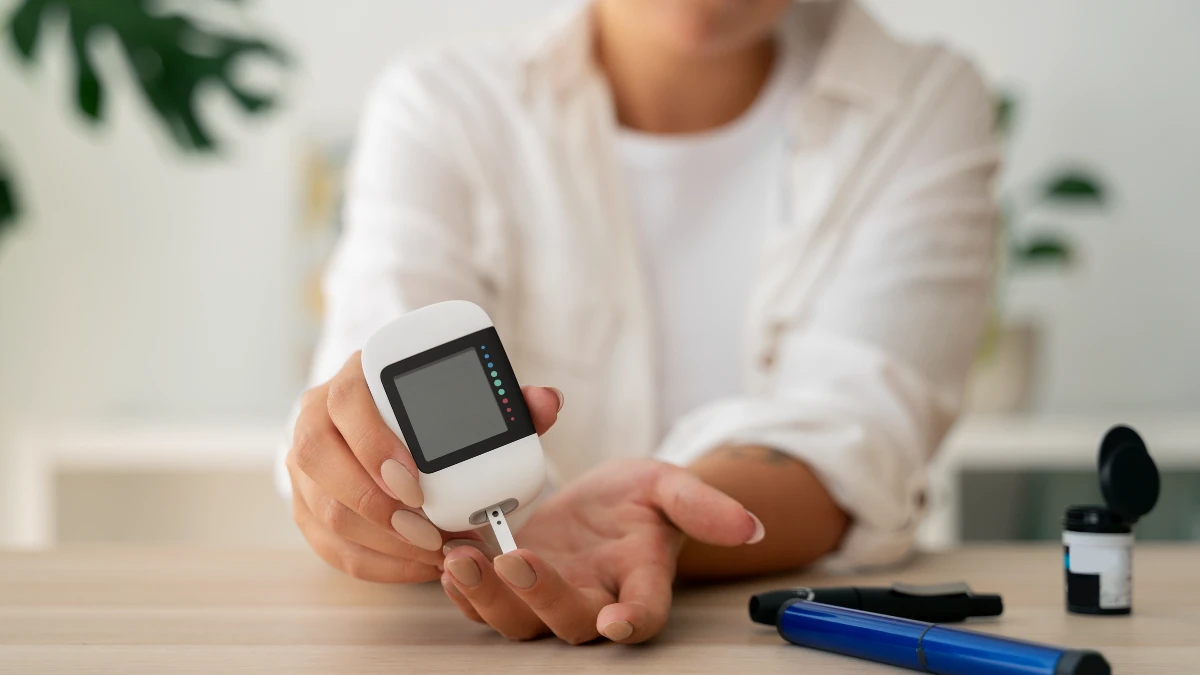
It hits at 10:30 AM. You’re shaking. And suddenly, that vending machine looks like a Michelin-star meal.
You ate breakfast, right? You probably even chose something “responsible” like oatmeal or a bran muffin. But here’s the thing. Your body doesn’t care about marketing claims on a box. It only cares about biology.
For many of us, the morning meal is actually a metabolic trap.
We are told to fuel up. But we often choose specific “healthy” imposters that send our glucose soaring, only to crash hard two hours later. It’s frustrating. You feel like you’re doing the right thing, yet your energy levels—and waistline—pay the price.
Let’s fix that. We are going to look at 8 specific offenders backed by glycemic science and exactly what to eat instead.
The Science Behind Breakfast Foods That Spike Blood Sugar
Morning Science
Why breakfast hits harder 🍳The Cortisol Spike
In the AM, your body experiences the Cortisol Awakening Response. This stress hormone makes cells resistant to insulin, meaning high carbs create a “perfect storm” for sugar spikes.
Glycemic Index (GI) 🚀
How FAST a food raises blood sugar compared to pure glucose.
Glycemic Load (GL) ⚖️
A better measure. It considers the quality AND amount of carbs in a serving.
Postprandial Response 📉
The fancy term for the rise in blood sugar after eating. Keep this curve flat for energy.
Before we get to the food, we need to understand the mechanism. Why does breakfast seem to hit harder than dinner?
It comes down to timing.
In the morning, your body experiences the Cortisol Awakening Response (CAR). This is a natural surge in stress hormones designed to wake you up. However, cortisol makes your cells slightly more resistant to insulin.
This means your body has to work harder to clear sugar from your blood in the AM than it does at 8 PM. If you dump a high Glycemic Load (GL) into the system right when cortisol is high, you create a perfect storm for a spike.
Key Terms Defined:
- Glycemic Index (GI): A ranking of how quickly a food raises blood sugar compared to pure glucose.
- Glycemic Load (GL): A more accurate measure that considers the amount of carbohydrates in a serving, not just the quality.
- Postprandial Glucose Response: This is the fancy medical term for the rise in blood sugar after eating. Keeping this curve flat is the secret to all-day energy.
8 “Healthy” Staples Spiking Your Glucose (The List)
Many items on this list have “health halos.” They are marketed as smart choices, but for your blood sugar, they might as well be candy.
1. Instant Oatmeal Packets
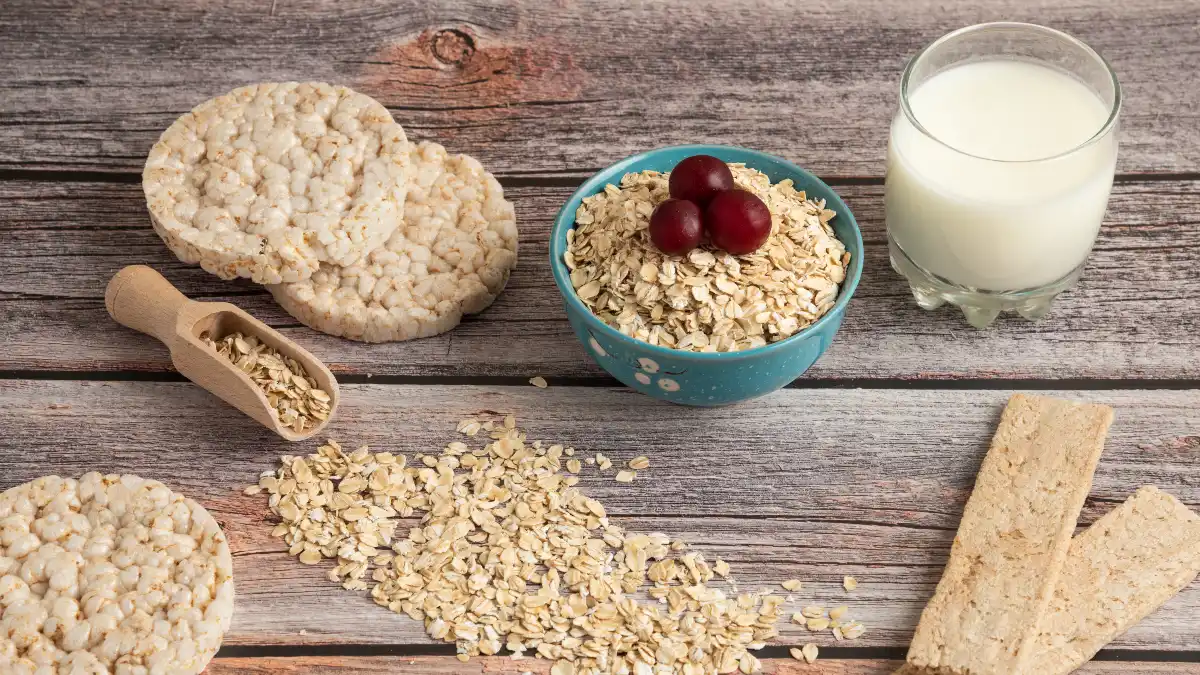
Oats are often praised as a superfood. And they can be. But the type of oat you choose changes the biological reaction entirely.
Instant oatmeal packets are highly processed. The oats have been steamed and rolled so thin they are practically dust. When you add hot water, they don’t just cook; they undergo rapid gelatinization.
Because the particle size is so small, your body doesn’t have to do any work to break them down. It hits your bloodstream almost instantly. Plus, most flavored packets contain 10-14g of added sugar.
The Oat Comparison:
| Feature | Steel-Cut Oats | Instant Maple Packet |
| Texture | Chewy, intact kernel | Mushy, pulverized |
| Digestion Speed | Slow (High effort) | Rapid (Pre-digested) |
| Fiber Status | Intact structure | Broken matrix |
| Glucose Effect | Slow, steady rise | Sharp, rapid spike |
How to Fix It: [Steel-cut oats benefits – informational guide]. Switch to steel-cut or “old-fashioned” rolled oats. The chewing required actually signals your body to prepare for digestion, and the intact fiber slows absorption.
2. Fruit Juice
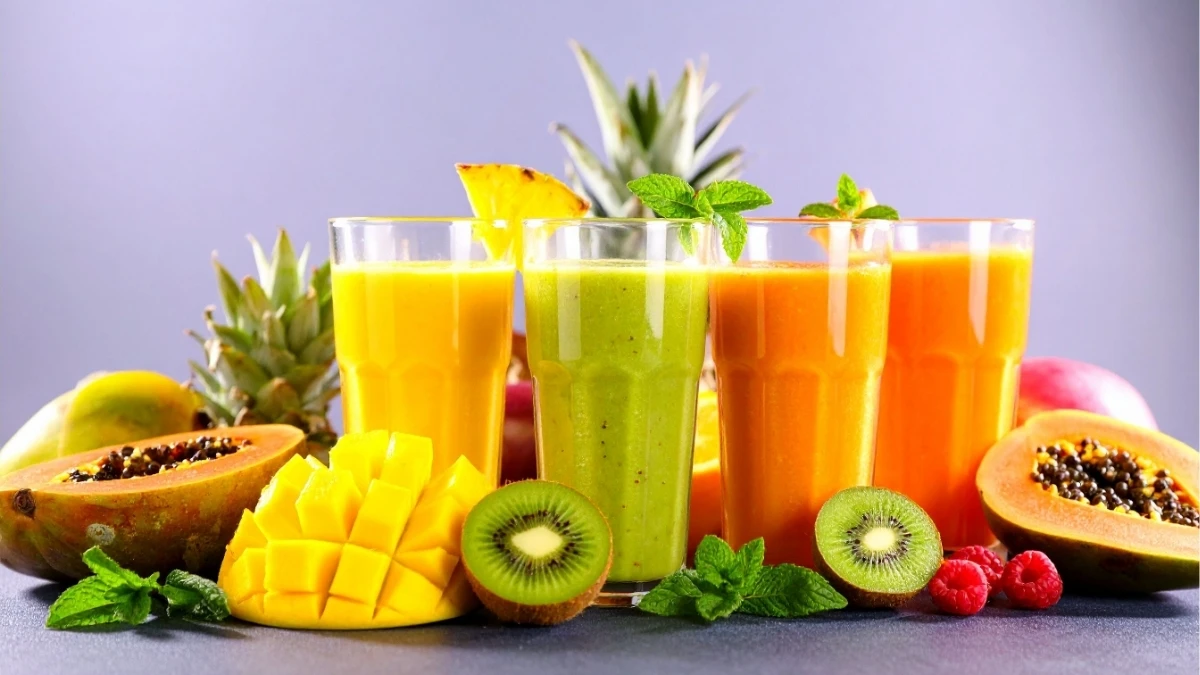
Here is a hard truth. A 12oz glass of orange juice contains roughly the same amount of sugar as a can of soda.
“But it’s natural!” you might say.
Yes, but it is stripped of its context. In a whole orange, the fructose is trapped inside a fiber matrix. Your stomach has to churn and break down that fiber to access the sugar. This takes time.
When you juice the fruit, you remove the fiber entirely. You are left with liquid carbohydrates. Liquids empty from the stomach faster than solids because they don’t require gastric breakdown. The fructose hits your liver all at once, overwhelming its capacity and spiking your blood sugar immediately.
Did You Know?
Current research suggests that liquid calories provide almost zero satiety (fullness). You can drink 300 calories of juice and still feel hungry five minutes later because your stomach didn’t stretch enough to signal “fullness” to your brain.
3. Flavored Yogurt

Yogurt is a tricky aisle to walk down.
Plain Greek yogurt is a metabolic superstar, packed with protein and gut-friendly probiotics. But the “fruit on the bottom” varieties? They are dessert.
Manufacturers know that plain yogurt is tart. To make it palatable for the masses, they add massive amounts of cane sugar or high-fructose corn syrup to the fruit jam.
How to Read the Label:
Don’t just look at “Total Sugars” (which includes naturally occurring lactose from the milk). Look specifically at the line for “Includes Xg Added Sugars.” If that number is above 5g, put it back.
- The Trap: Vanilla or “Honey” flavored yogurts often have just as much sugar as the fruit ones.
- The Swap: Buy plain, full-fat Greek yogurt. Add a handful of real blueberries. The fiber in the berry skin helps blunt the sugar response.
4. White Bread and Bagels

You’re sitting at a diner. The toast arrives, golden and warm. It smells incredible because the starches are breaking down into simple sugars right there on the plate.
White bread and bagels are made from refined wheat flour. During processing, the bran (fiber) and the germ (nutrients) are stripped away. What is left is the endosperm—pure starch.
When you eat this, an enzyme in your saliva called amylase starts converting that starch into glucose before you even swallow. It is incredibly efficient.
Pro-Tip: The Freezer Trick
Want to lower the spike of your toast? Freeze your bread first, then toast it.
Research shows that the cooling process changes the molecular structure of the starch, turning it into Resistant Starch. This type of starch resists digestion in the small intestine, acting more like fiber and resulting in a lower glucose spike.
5. Most Breakfast Cereals
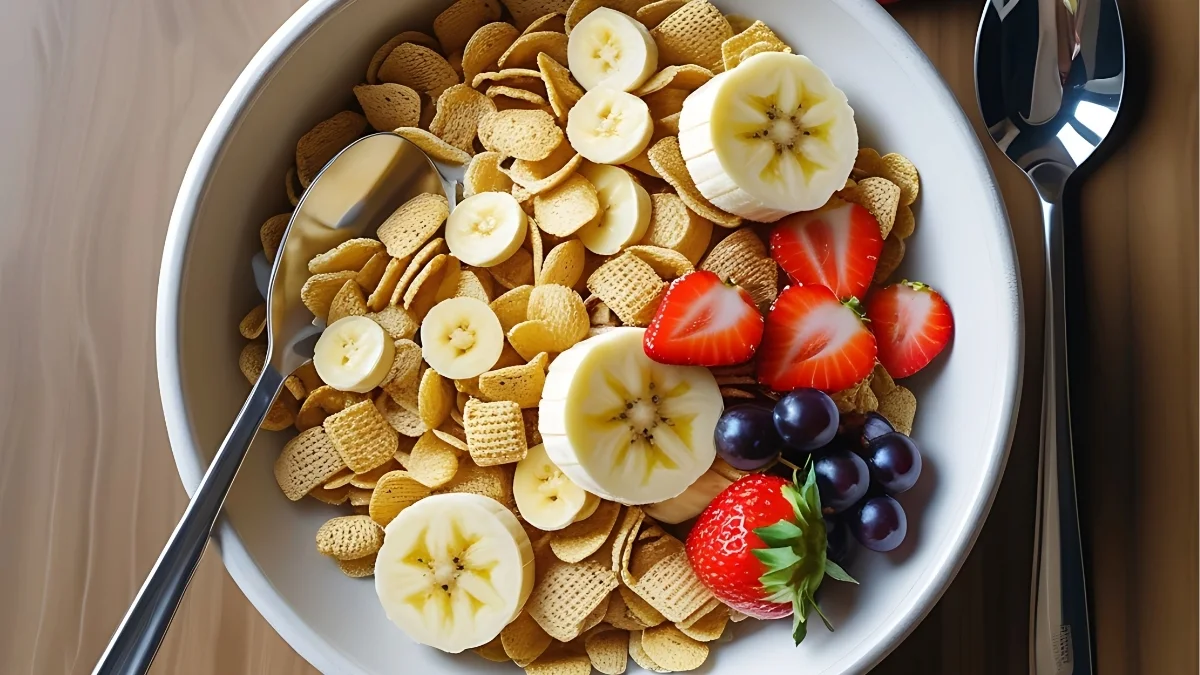
The cereal aisle is a masterclass in marketing deception.
You will see boxes screaming “Heart Healthy,” “Whole Grain,” or “Fortified with Vitamin D.” Ignore the front of the box. Turn it to the side.
Most commercial cereals are extruded grains sprayed with sugar. Even the “healthy” bran flakes often list sugar as the second or third ingredient. The fortification (adding vitamins back in) is a cheap way to mask the fact that the food is nutritionally void.
5 Words to Avoid on Cereal Labels:
- Cane Crystals
- Dextrose
- Malt Syrup
- Rice Syrup
- Fruit Juice Concentrate
If you see these near the top of the list, this is a breakfast food that spikes blood sugar, regardless of how many vitamins are added.
6. Granola and Energy Bars

This one hurts. We want to believe granola is the ultimate health food.
But let’s look at how it’s made. To get those delicious, crunchy clusters, you have to bind the oats and nuts together. What do you use as a binder? Sticky sweeteners. Honey, maple syrup, agave, or brown rice syrup.
Granola is incredibly calorically dense. A small half-cup serving can pack as much sugar and calories as a standard candy bar. The energy bars are often worse, coated in “yogurt” (sugar and oil) or chocolate.
The Myth: Granola provides sustained energy.
The Reality: The high sugar content creates a quick peak, followed by a reactive hypoglycemia (low blood sugar) crash, leaving you reaching for another snack. [Low sugar granola recipes – recipe collection].
7. Pancakes and Waffles

Think about Sunday morning. The smell of batter on the griddle. It’s comforting.
But structurally, a pancake is a disk of refined flour. It has almost zero protein or fiber to slow down digestion. Then, we execute the “double whammy.” We pour syrup on top.
The Syrup Trap
Most “pancake syrup” isn’t maple syrup. It is high-fructose corn syrup with caramel color. Even real maple syrup, while containing some minerals, is still a simple sugar that hits the bloodstream fast.
When you combine a high-carb batter with a liquid sugar topping, you are asking your pancreas to run a marathon without training. The insulin surge is massive.
8. Dried Fruit
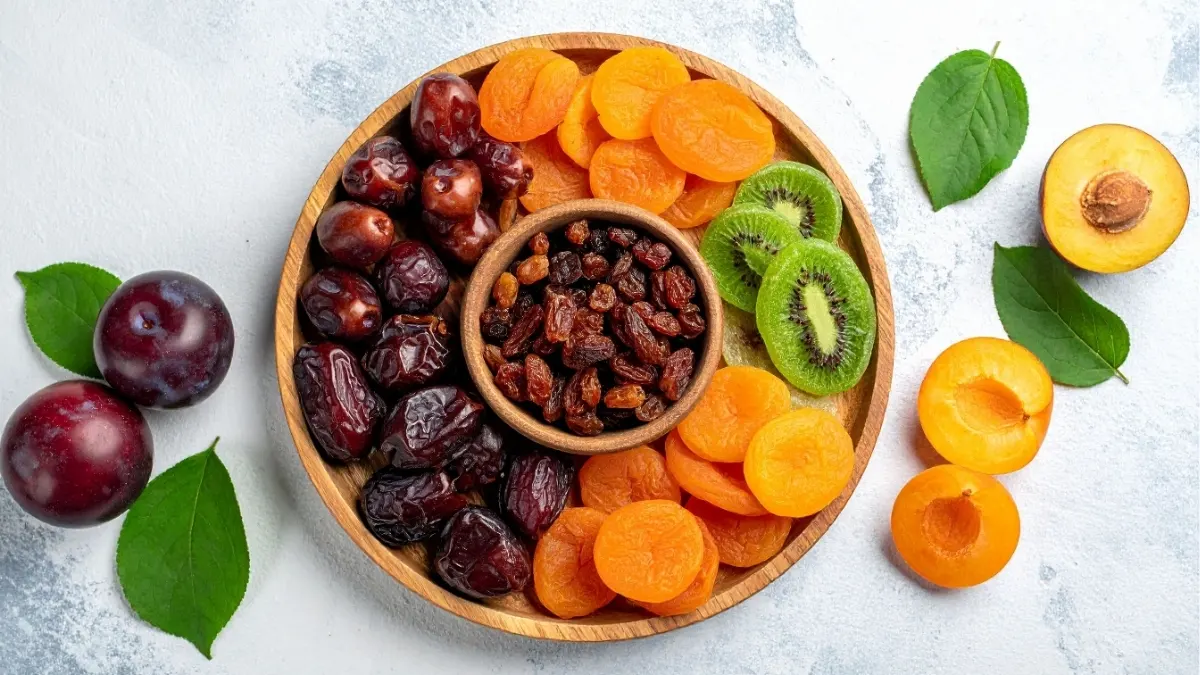
Dried fruit is nature’s candy. But it’s also a concentration bomb.
When you dehydrate fruit, you remove the water content. This shrinks the volume significantly.
Visualize This:
- Imagine eating 20 grapes. You’d get tired of chewing eventually.
- Now imagine eating 20 raisins. You could throw that back in a single handful without thinking.
Because the water is gone, the sugar concentration by weight skyrockets. It is very easy to overconsume carbohydrates when the volume is this low. Raisins, dried cranberries (often with added sugar), and dried mango are potent spikers.
How to Stabilize Your Morning Blood Sugar
Stabilize Morning Blood Sugar ☀️
🧥 Clothe Your Carbs
Never let a carb go naked! Always dress it up with protein, fat, or fiber to keep energy steady.
Prioritize Protein
Start with 30g (eggs, cottage cheese) to suppress hunger hormones.
Add Healthy Fats
Nuts or avocado take longer to digest, blocking rapid breakdown.
Fiber First
Eat veggies first to create a “mesh” that catches sugar.
You don’t have to skip breakfast. You just need to change the architecture of the meal.
To keep energy steady, think about “Clothing Your Carbs.” Never let a carbohydrate go into your stomach naked. Always dress it up with protein, fat, or fiber.
The Anti-Spike Action Plan:
- Prioritize Protein (30g Rule): Start with protein. Eggs, cottage cheese, or protein powder. Protein suppresses the hunger hormone ghrelin and slows gastric emptying.
- Add Healthy Fats: Avocado, nuts, or olive oil. Fat takes longer to digest, which physically blocks the enzymes from breaking down carbs too quickly.
- Fiber First: If you are going to eat toast, eat a handful of spinach or some cucumber slices first. This fiber creates a mesh in your intestines that catches the sugar and slows its absorption.
By focusing on macronutrient balance, you can dampen the glucose response of almost any meal.